



Best GCSE History School Trips in Europe
Best GCSE History Trips in Europe
Take your students back in time with the best GCSE history trips in Europe. From standing on the site of the D-Day landing to witnessing the conditions of Auschwitz-Birkenau, pupils have the opportunity to immerse themselves in pivotal moments of our past, witnessing history first-hand. These travel experiences deepen their understanding, enhance exam confidence, and may even help to spark a lifelong passion for the subject.
Places to Visit for GCSE History Students
Europe offers an unparalleled classroom for GCSE history students, particularly those studying the defining moments of the 20th century. Notable places to visit include:
- Belgium and France: Ideal for learning about the Western Front, trench warfare and the legacy of the First World War.
- Germany: Essential for understanding the rise of the Nazi Party, life under dictatorship and the divisions of the Cold War.
- London: Perfect for exploring British history, the Blitz and political decision-making.
- Poland: A profoundly moving destination to study the devastating realities of the Holocaust and Eastern European WWII history.
By taking students directly to the sites where world-altering historical events unfolded, you bridge the gap between textbook theory and deep understanding.
5 GCSE History School Trip Ideas
To bring the curriculum to life, these are some of the best school trips to help with history GCSE:
1. Visit the Historic City of Berlin
The location for many pivotal events in the 20th century, Berlin is an ideal place to visit with your GCSE students. Allowing students to gain real-life insight into the rise, opposition and fall of Nazism, as well as the country's post-war division, Berlin is a city that has witnessed significant change and transformation in recent years.
With history on every street, these are the recommended locations to take your students:
- Berlin Wall: Erected in 1961 to stop citizens fleeing to the West, this 155-kilometre wall was finally dismantled in 1989.
- Brandenburg Gate: One of Berlin’s most famous landmarks, it’s often viewed as a symbol of Germany's division and unification.
- Checkpoint Charlie: This historical landmark was the best-known border crossing between East and West Berlin during the Cold War.
- Holocaust Memorial: Officially known as the Memorial to the Murdered Jews of Europe, this striking site of remembrance spans 19,000 square meters.
- The Reichstag: The burning of this parliament building in 1933 is considered a key event in the establishment of the Nazi dictatorship.
2. Study the Holocaust in Krakow
With preserved districts, memorial sites and world-renowned museums, Krakow offers a powerful exploration of Jewish life in the 20th century. Allowing your students to gain valuable insight into the communities' lives before, during and after WWII, it's one of the most significant places in Europe for studying the Holocaust.
To get the most out of your trip, ensure you include these places in your itinerary:
- Auschwitz-Birkenau: German Nazi concentration and extermination camps; today they are dedicated to preserving the memory of the Holocaust.
- Galicia Jewish Museum: A museum that documents Jewish culture and commemorates the victims of the Holocaust in Poland with a poignant photography exhibition.
- Kazimierz: A historic Jewish district that was deserted when residents were forced to move to the Podgorze ghetto in 1914.
- Podgorze Ghetto: Cramped living quarters where 15,000 Jewish people lived following the rise of Nazism.
- Schindler’s Factory: Now a museum highlighting life in pre- and post-war Krakow, this notable factory saved the lives of hundreds of Jewish people from Nazi death camps.
3. Explore the Events of WWII in Normandy
Normandy grants students the opportunity to deepen their understanding of WWII. Bringing the events of 1944 to life, they can walk the D-Day landing beaches and visit memorials to fallen soldiers, helping them to connect with history on a personal level and grasp the scale of the conflict first-hand.
Key educational locations for student excursions include:
- Arromanches Invasion Museum: A seafront museum dedicated to commemorating the D-Day landings and key WWII events.
- D-Day Landing Beaches: Five beaches - Utah, Omaha, Gold, Juno and Sword - spanning 50 miles of the Normandy coast that were the location for the Allied forces' attack in 1944.
- Memorial de Caen: One of the largest museums in Europe, it offers a deep dive into the significant history of the 20th century.
- Pointe du Hoc: A 35-metre cliff on the north-west coast of Normandy that overlooks the English Channel and was the location of several German batteries in WWII.
- The American Cemetery: A WWII cemetery and memorial, honouring 9,389 fallen American troops.
4. Discover the WWI Battlefields in Ypres and The Somme
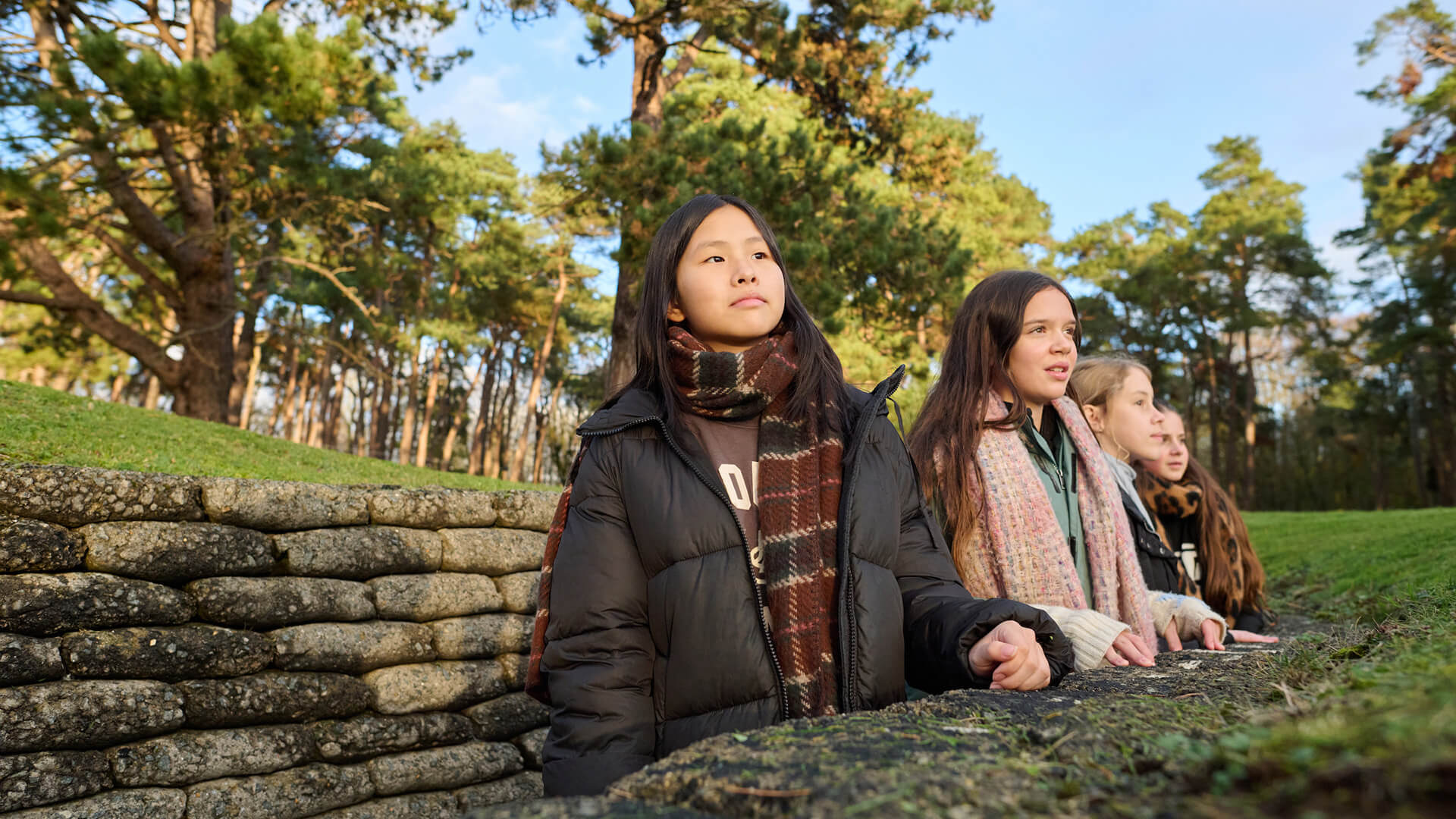
A valuable destination for GCSE students is a trip to the WWI battlefields. Providing an unparalleled opportunity to bring the curriculum to life, this experience allows students to step outside the classroom to gain a firsthand understanding of the conflict, its scale, and the human cost.
To create an immersive learning experience, these are a few of the places we’d recommend visiting on your trip:
- Bayernwald (Croonaert Wood): Occupied by German troops from late 1914, this site features a preserved trench system, mine shafts, and several large concrete emplacements.
- Flanders Fields Museum: A state-of-the-art, immersive museum that provides comprehensive insight into the war in Flanders.
- Menin Gate Memorial: With the names of 54,896 missing soldiers, this memorial is the setting for the daily performance of the Last Post.
- Newfoundland Park: One of the largest and best-preserved trenches on the Western Front.
- Talbot House: A former British soldier’s club, this living museum is an insight into daily life during WWI.
5. Travel into the Past in London
Closer to home, London is not to be overlooked when it comes to places to visit with your GCSE history cohort. With numerous museums and historical sites, the capital presents a great opportunity for students to explore 20th-century Britain and witness the impact of that period on the modern day.
Historical London destinations to add to your classes’ itinerary include:
- Imperial War Museum: A detailed exploration of WWII and its global impact told through the lives of those who experienced it firsthand.
- Holocaust Exhibition: Photos, books, artwork, letters and personal objects tell the individual stories of Jewish people murdered in the Holocaust.
- Churchill War Rooms: The setting for key strategy during the Blitz, these rooms were used by Winston Churchill and the War Cabinet during air raids.
- HMS Belfast: Built for the Royal Navy, this warship supported the Allied troops on D-Day.
- Battle of Britain Bunker: Key decisions took place in this underground RAF operations room during WWII.
How to Plan the Perfect History GCSE Trip
Reaching the destination is only half the journey; what truly enhances a history school trip is the expertise students encounter along the way. This is why our school trips are designed to handle the heavy lifting, ensuring your class receives the best possible learning experience.
Our carefully curated itineraries are directly matched to the major UK exam boards, including AQA, Edexcel and OCR. This ensures that every excursion supports your classes' learning objectives and exam preparation.
Ready to bring history to life? Let our experts manage the details while you focus on teaching. Request a quote today