



From green to black: A guide to ski run progression on a school ski trip
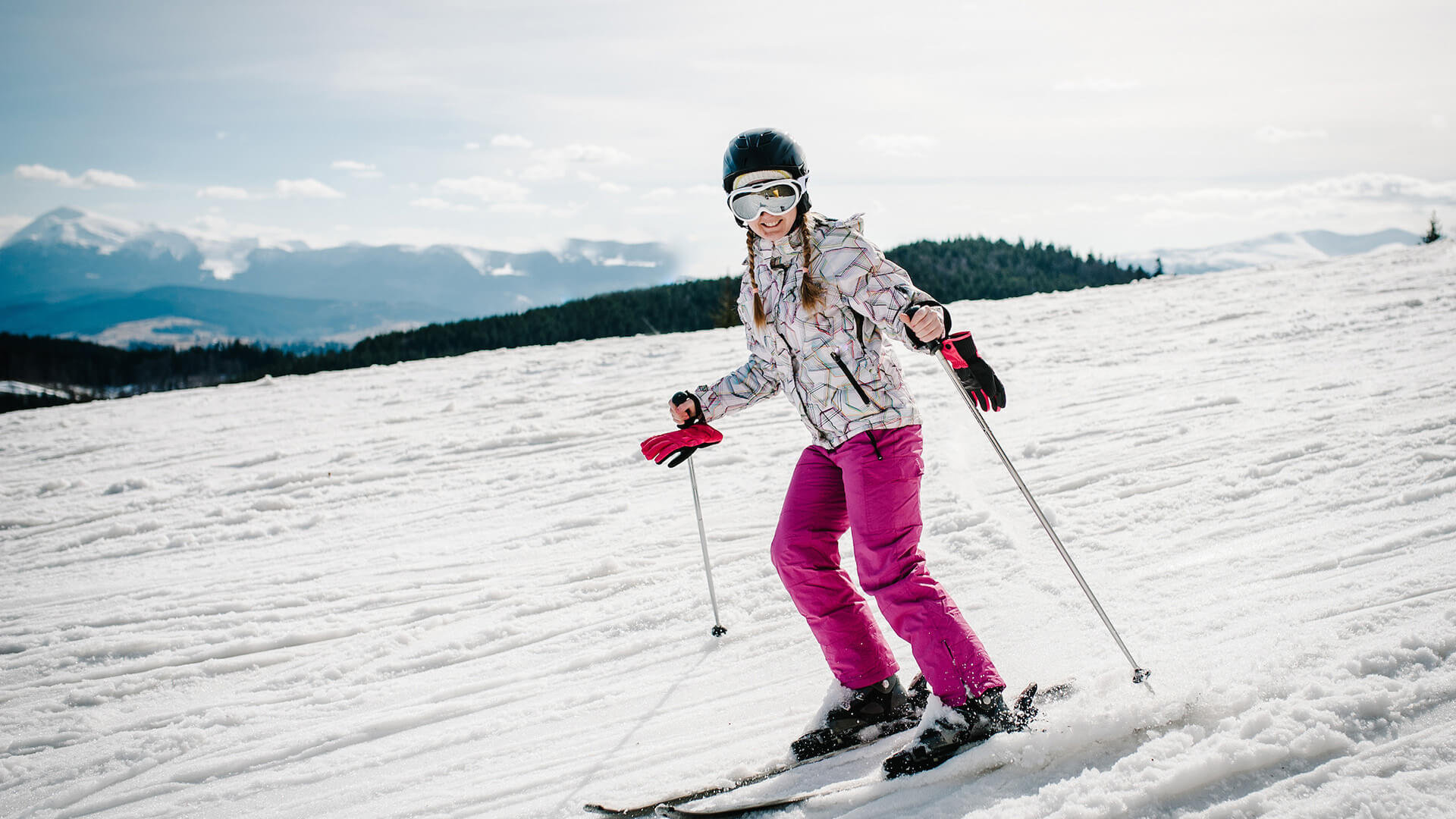
There is a lot of excitement surrounding a ski school trip, but sometimes that excitement can be replaced with a bit of confusion when you (or your students) first look at a resort map. With all those coloured lines weaving down the mountain, how do you know where to go?
Understanding ski run colours is the key to both safety and fun. In this blog, we will break down the international European system (green, blue, red, black), explain what each colour means, and give the students a few helpful tips for progression so they can confidently move up the difficulty chart throughout their trip.
What are the different ski run colours?
In the Alps, which covers countries like France, Austria, and Italy, all of the resorts use a universal colour code to highlight the steepness and difficulty of a trail or a “piste”. These ski run difficulty colours help experienced skiers find a challenge and, more importantly, ensure that beginners stay on safe, gentle slopes. The system uses four main colours to indicate the level of risk on a slope and the level of skill required to safely go down.
The easiest runs you will find are the green ski runs. These are the training grounds for every first-timer, characterised by being very wide and having the shallowest gradient, usually less than 15%.
When you've mastered the basics on the greens, you can consider progressing to blue runs. These are more geared towards intermediate skiers and snowboarders. Blue runs typically have a consistent, manageable slope of up to 25%, making them ideal for practising parallel turns. Not too easy, but not too difficult, making them perfect for students who have just learned the basics and are looking for a bit of a challenge.
If students are looking to increase the challenge, red runs are a significant step up in difficulty. They are steeper, often narrower, and sometimes have a slope of up to 40%. These runs require a higher level of technical skill, precise turning, and the ability to handle different snow conditions.
Finally, at the top of the scale are the black ski runs. These are the slopes designed for expert skiers only, featuring steep gradients of 40% or higher and are often left ungroomed, with large snow bumps and icy patches.
Now that we know what each colour means, let's go into more detail about different ski zones, which might encompass various ski run colours, and what you can expect when entering each zone.
The beginner zone: Green and blue ski runs
This is where the adventure begins for most students and where the bulk of the learning occurs. For anyone on a ski school trip, the green and blue runs are where the fundamental skills are learned and perfected. Let's have a look at what students can expect when faced with green and blue ski runs.
Green ski runs
As we have mentioned already, the green ski runs are the ideal training grounds for every student learning to ski or snowboard. They are specifically designed for first-timers and absolute beginners. These runs are built to be very wide, with shallow gradients (often barely a slope at all) and located near the base of the mountain, close to the ski school meeting points.
At the start of your student ski trip, students will spend a good chunk of their time here learning the basics. These include how to put their skis on, how to slide, and how to get up after a fall. One of the most important lessons is how to snowplough, or more commonly called "pizza wedge”, which is a method used to control your speed and come to a complete stop.
Until they can stop reliably and steer in both directions, the green runs are the safest and best place to be. For your students, the goal is to make smooth turns and stops without falling, which will not only make their instructor proud but also set them up to progress to the next level. The blue runs.
Blue ski runs
The blue runs are the natural next step once students have mastered the basics. They represent a kind of “playground" for intermediate skiers. A blue run is slightly steeper than a green run and often has more varied terrain, taking you higher up the mountain for some truly breathtaking views.
The key to mastering blue runs is moving beyond the snowplough and starting to feel comfortable with parallel turns. Blue runs are where students develop speed control and learn to manage the slightly faster flow of other skiers. Once they feel relaxed, in control, and can consistently stop without panicking on a blue run, they are officially an intermediate.
When students get to this stage, it is time for them to start considering moving out of their comfort zones, going from the beginner zone into a more challenging environment, involving red and black ski runs.
Advanced challenges: Red and black ski runs
Moving to red and black runs is a significant achievement; however, it requires a high level of technical skill and mental confidence to make the transition. These are not runs for the casual skier and should not be attempted by a student without an instructor’s approval.
Let’s have a look at what students can expect when moving up to these more advanced levels.
Red ski runs
Red runs are yet another big step up in terms of difficulty, requiring students to have a more refined technique. They are steeper and can sometimes be narrower than blue runs, which gives students less time to make decisions. On these red ski runs, students might encounter varied conditions, such as deeper snow, patches of ice, or small lumps of snow, sometimes referred to as “moguls”, that are caused by skiers pushing the snow as they turn.
For a student to effectively conquer a red run, they must be comfortable going down blue runs with control and mastering both short and long parallel turns. Red runs are where they will be encouraged to practice "carving," which is how they use the ski's sharp edge to slice through the snow. This is often when groups on ski school trips reach their peak technical ability, depending on the trip duration.
Black ski runs
The black ski runs are a true test of skiing ability and are usually reserved for expert skiers and snowboarders. These are the most challenging runs in the resort, having a steep gradient of 40% or more.
Black runs are rarely groomed, which means that they will often be full of large moguls or patches of ice. Skiing a black run requires excellent technique and full concentration throughout the run.
Students must be able to perform very quick, short, controlled parallel turns to manage their speed on the steepest sections. If they struggle on a red run, they should probably avoid a black ski run. It is uncommon for students to reach this level on their first school ski trip; however, some students with prior ski experience are willing to attempt black runs. If this is the case, make sure that they have approval from their ski instructor and are supervised while going down the slope.
Progression tips for students on ski school trips
Progression isn't just about being able to go down a slope at high speeds; it's about being in control and having the confidence needed to complete a ski run safely. Here are a few tips for progression to help your students move safely and successfully through the various ski run difficulty colours:
- Be bored before you go: Before moving from green to blue, students should be able to ski the green run repeatedly without thinking about their technique. If they are still focusing on making a snowplough, they aren't ready to move up.
- Lean forward: Many beginner skiers lean backwards when they feel scared, which can cause them to lose control. Students should force themselves to keep their shins pressed against the front of their boots. Leaning forward gives them control over the front edges of their skis, which is essential for turning.
- Pressure the outside ski: When turning, the ski on the outside of the turn should be doing most of the work. They should practice lifting the inside ski slightly during turns. This forces them to balance on the outside ski and improves their edge grip.
- Rack up the mileage: The best way to get better is simply to ski more. Back-to-back days on your student ski trip build muscle memory faster than anything else. Students shouldn’t be afraid to keep running the same blue slope until it feels effortless.
- Listen to the instructor: The instructor knows the mountain and your student’s ability level better than anyone. They will tell them exactly when you are ready to try the next level. Students should never try to challenge a red or black run simply because they think they should.
The fun after the slopes
A ski school trip isn't over when the lifts close. The evening activities, also known as Après-Ski (French for "after skiing"), are just as fun as the slopes and are a huge part of the experience, especially when you are exploring the culture of different European countries.
The evening provides an opportunity for students to relax, socialise, and explore the resort environment. Typically, a school ski trip will include a variety of planned and supervised activities, such as indoor swimming, bowling, ice skating or a fun quiz night in the hotel.
Everyone looks forward to a classic Italian pizza night, or perhaps a crêpe night in France! These outings offer a taste of local culture and give the students a chance to explore the village.
While the evening is fun, safety rules still apply. Supervision should be 24/7. There should be a clear, non-negotiable curfew enforced every night. Students must be in their rooms by this time.
Encourage them to stick with their buddy and follow the instructions of the group leaders or representative during any evening activity. The accommodation is safe, but they must respect the property and other guests. Remember that safety extends to simple rules like watching your step on icy paths outside the hotel and being aware of traffic when crossing roads.
Ready to plan your own school ski trip?
Understanding the ski run colours is the first step toward a fantastic adventure. By respecting difficulty levels, from simple green ski runs to challenging black ski runs, you can ensure that your ski school trip is safe and supports your students' growth and development.
At NST, we provide the perfect mix of resorts, from the gentle, progression-focused slopes of Dachstein West in Austria to the vast, varied terrain of Les Arcs in France.
Ready to book an incredibly rewarding learning experience for your students? Get in touch with NST today to speak to one of our dedicated ski experts or request a quote for your next unforgettable student ski trip.